
Avoid the 5 Things in Beijing That May Ruin Your Trip(2026 Guide)
Updated: May 5
Beijing is often known for its imperial landmarks and world-famous attractions, but this Avoid the 5 Things in Beijing – 2026 Guide focuses on something equally important - what not to do.
From visiting major attractions during national holidays, to relying only on Google Maps, to arriving without digital payments set up, small missteps can quietly ruin your experience.
Beijing is efficient and modern, but it operates differently from many Western cities.
In this guide, you’ll discover avoid the 5 things in Beijing that commonly frustrate first-time visitors, along with practical advice to help you travel smarter and smoother.
Avoid the 5 Things in Beijing - 2026 Guide for Smart Travelers
This section highlights the most common mistakes visitors make when they travel to Beijing.
It offers a more prepared, realistic way to experience the capital - understanding crowds, reservations, digital systems, and local travel habits before you arrive.
Smart Planning That Protects Your Beijing Experience
Beijing is impressive, but also fast-paced and highly organized. These five insights help you avoid unnecessary stress, save time, and protect the quality of your trip - so you can focus on enjoying the city instead of fixing problems. Or you just need to join our tour with seamless experience.
1,Avoid Visiting Tourist Attractions During Chinese Public Holidays

Beijing is not only the capital of China - it is also the No.1 domestic travel destination in the country. When national holidays arrive, millions of domestic travelers choose Beijing for family trips, school breaks, and cultural sightseeing.
And here’s the key issue: Most people in China travel during the same few holiday windows.
Why should avoid visiting tourist attractions during Chinese public holidays?
Heavy crowds of visitors climbing a steep section of the Great Wall of China on a clear day. The Hall of Prayer for Good Harvests at the Temple of Heaven in Beijing, surrounded by many tourists
During holidays such as Chinese New Year, Labor Day, or National Day:
Attractions reach maximum visitor capacity
Tickets sell out days (sometimes weeks) in advance
Security checks and entry lines become extremely long
Popular tourisms are packed
Hotels and flights become more expensive
Places like the Forbidden City, Badaling Great Wall, and Summer Palace can feel overwhelming rather than enjoyable.
Instead of appreciating architecture and history, visitors often spend more time navigating crowds than exploring.
What You Should Do Instead
If your schedule allows:
Avoid major Chinese public holidays
Travel on weekdays instead of weekends
Visit popular attractions right at opening time
Consider lesser-known sections of the Great Wall
Try some non-tourist things to do, check the blog <Things to Do in Beijing-5 Unique Experiences Beyond the Tourist Spots(2026 Guide) > to give you some ideas.
Beijing is incredible - but timing matters. When you travel to Beijing, choosing the right dates can make the difference between a stressful trip and a memorable one.
2, Aviod visiting tourism without reservations

One major mistake when you travel to Beijing is assuming you can simply show up at famous attractions and buy tickets on the spot.
Why Beijing Works This Way
Beijing is China’s top tourism destination. Authorities manage visitor flow carefully for safety and preservation reasons. Digital reservations help control crowds and reduce congestion inside heritage sites.
It’s efficient - but only if you prepare.
A Secret About Forbidden City Tickets
Currently, if you hold a foreign passport, you can still buy tickets onsite at the Forbidden City ticket office.
However, this policy is not guaranteed to remain in place. Entry rules and ticketing procedures in Beijing can change without much advance notice - especially during peak seasons or special periods.
3, Don't trust Google Map

Google Maps often doesn’t work properly in mainland China, due to regional restrictions. Locations can be outdated, misplaced, or even completely wrong.
Here’s why:
📍 Pins may appear in the wrong spot
🕒 Opening hours are often inaccurate
🚫 Some restaurants or shops don’t exist anymore
🧭 Navigation may fail without a stable VPN
Many local businesses don’t actively update their Google listings.For real-time accuracy, locals use apps like Amap (Gaode) or Baidu Maps instead.
3, Don't forget to set up Alipay or WeChat Pay before landing

China is basically a cashless country now.Yes, cash is still legal and accepted - but in real life, it’s just not that convenient anymore.
Here’s why you should set it up in advance:
💳 Most people pay by QR code - even street vendors
🚕 Taxis, small shops, cafés often expect mobile payment
🧾 Some places don’t have enough change for cash
🚄 You’ll need it for metro, bike sharing, food delivery, tickets
Alipay and WeChat Pay both allow international cards to be linked now.It only takes a few minutes - but doing it before you land saves a lot of stress at the airport.
If you haven't set up, the blog<How to Use Alipay and WeChat Pay in China (Guide for Foreigners)> gonna help you.
5, Don’t try to wave down a taxi on the street
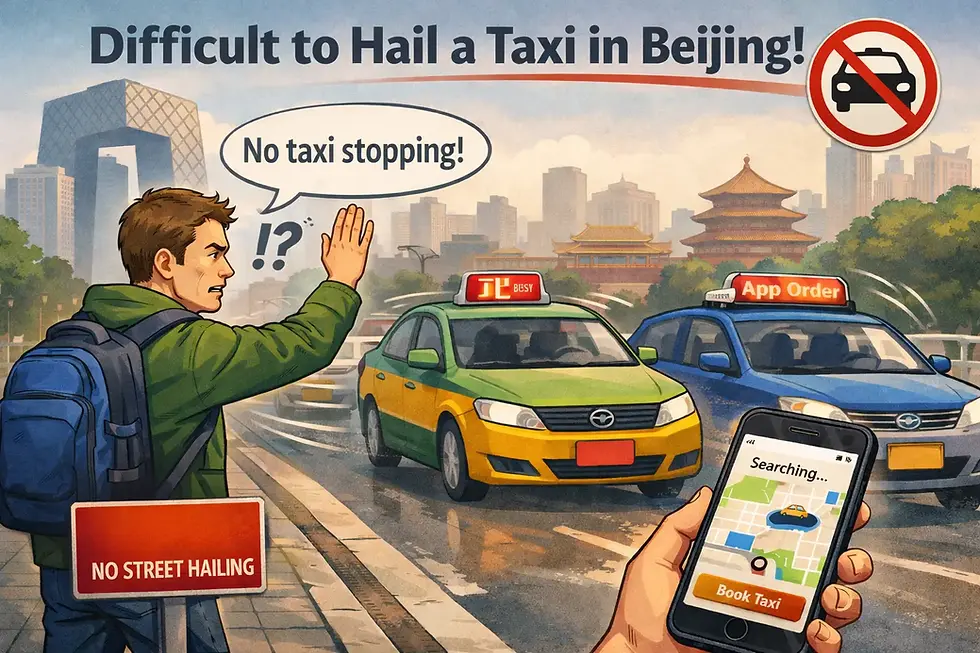
If you travel to Beijing expecting to raise your hand and stop a taxi like in New York or London, you may be standing there for a very long time.
In Beijing, it’s very difficult to wave down a taxi on the street - especially in busy districts or during peak hours.
Why It’s Hard to Flag a Taxi
Beijing operates differently from many Western cities:
Most taxis are already booked through ride-hailing apps
Many cars you see are occupied
Drivers prefer app orders over random street passengers
During rush hour, almost no empty taxis are available
Even if you see taxis driving by, the light may indicate they are unavailable. From the sidewalk, it’s often impossible to tell clearly.
And during rain, late evenings, or holidays? It becomes even harder.
What Happens If You Try Anyway
You may:
Wait 20–40 minutes
Watch multiple taxis pass by
Feel unsure whether you’re standing in the right place
Get frustrated in traffic-heavy areas
For first-time visitors, this can feel confusing and stressful.
What You Should Do Instead
When you travel to Beijing:
Download a ride-hailing app before arrival
Set up mobile payment in advance
Save your hotel address in Chinese
Allow extra time during rush hour
Booking through an app is faster, clearer, and more reliable. You see the driver, the plate number, estimated arrival time, and route.
In modern Beijing, transportation is digital. Trying to wave down a taxi the old-fashioned way simply doesn’t work well anymore.


Comments